ASSESSMENT OF BUTTERFLY SPECIES DIVERSITY
AND CONSERVATION NEEDS IN OKOMU NATIONAL
PARK, EDO STATE
Prepared by: Shedrack Ighagbon, EMACS Environmental Nigeria Ltd
Collaborator: Dr. Sunny Akhigbe, Founder, A Boy and His Dream Foundation
Study Period: August 2025 – February 2026
Abstract
This study evaluated the diversity, abundance, and ecological significance of butterfly species within Okomu National
Park in Edo State, Nigeria. Butterflies are recognized globally as important bio-indicators because of their sensitivity to
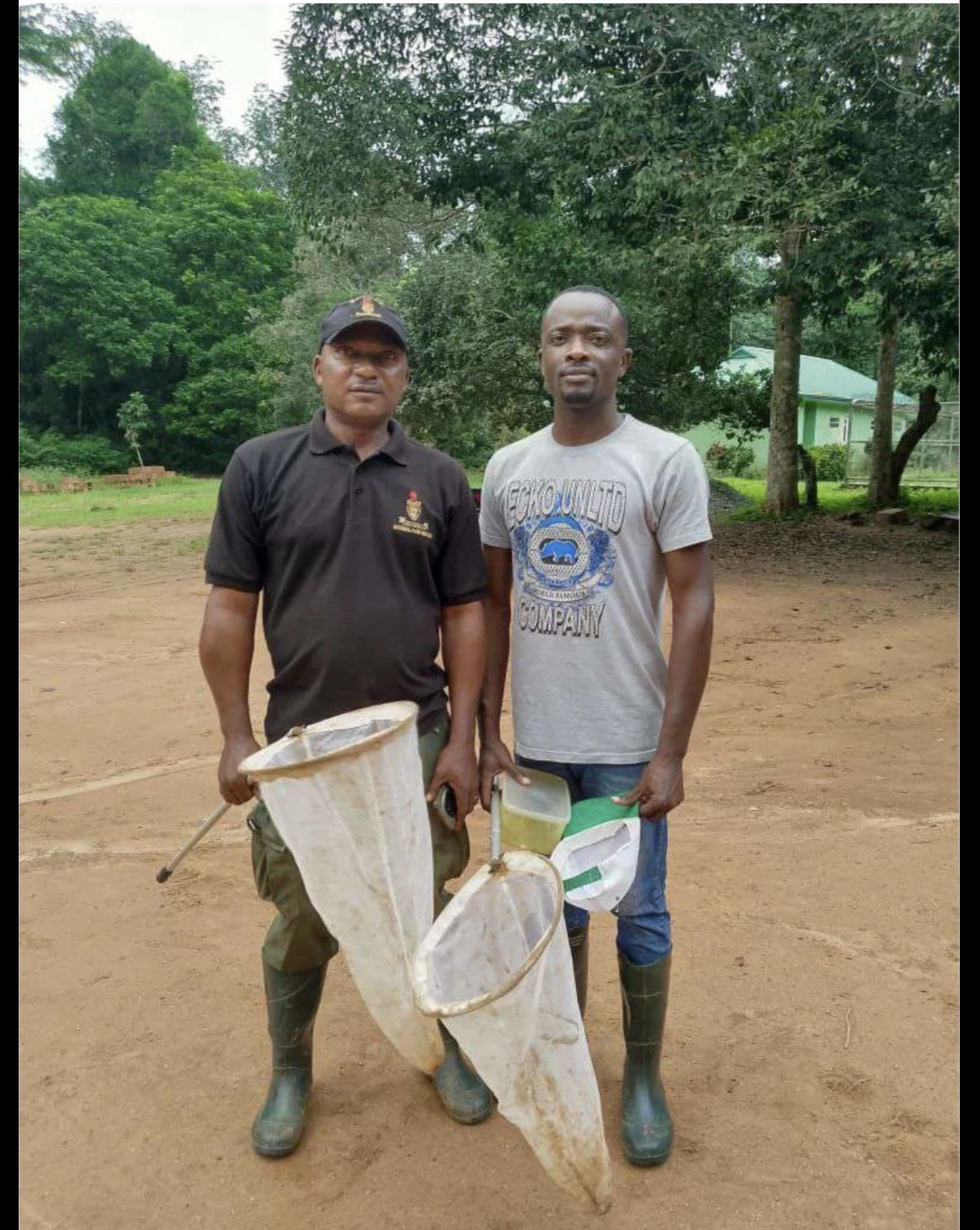
environmental changes. The study used line transects, hand sweep nets, fruit bait, and organic attractants to assess
butterfly populations across multiple ecological zones. A total of 135 butterfly species from five major families were
recorded, with the Nymphalidae family being the most dominant. Results showed that butterfly abundance increased
significantly during the wet season, demonstrating the influence of rainfall, vegetation density, and habitat stability on
butterfly populations. The findings confirm that Okomu National Park remains an important biodiversity hotspot that
supports ecological balance, pollination, and environmental sustainability.
Significance of the Study
• Butterflies serve as reliable indicators of ecosystem health.
• High butterfly diversity reflects strong biodiversity and habitat quality.
• The study provides critical data for conservation planning and ecological restoration.
• Findings support environmental education and sustainable land-use planning.
• The research strengthens eco-tourism and conservation awareness initiatives in Nigeria.
Introduction
Butterflies belong to the order Lepidoptera and play important ecological roles as pollinators and indicators of
environmental health. Across the world, butterfly populations are threatened by habitat destruction, climate change,
pollution, and unsustainable land use practices. This assessment was conducted to evaluate butterfly abundance,
species distribution, and habitat conditions within Okomu National Park. The study also examined how environmental
factors such as rainfall, vegetation cover, and seasonal changes influence butterfly populations.
Materials and Methods
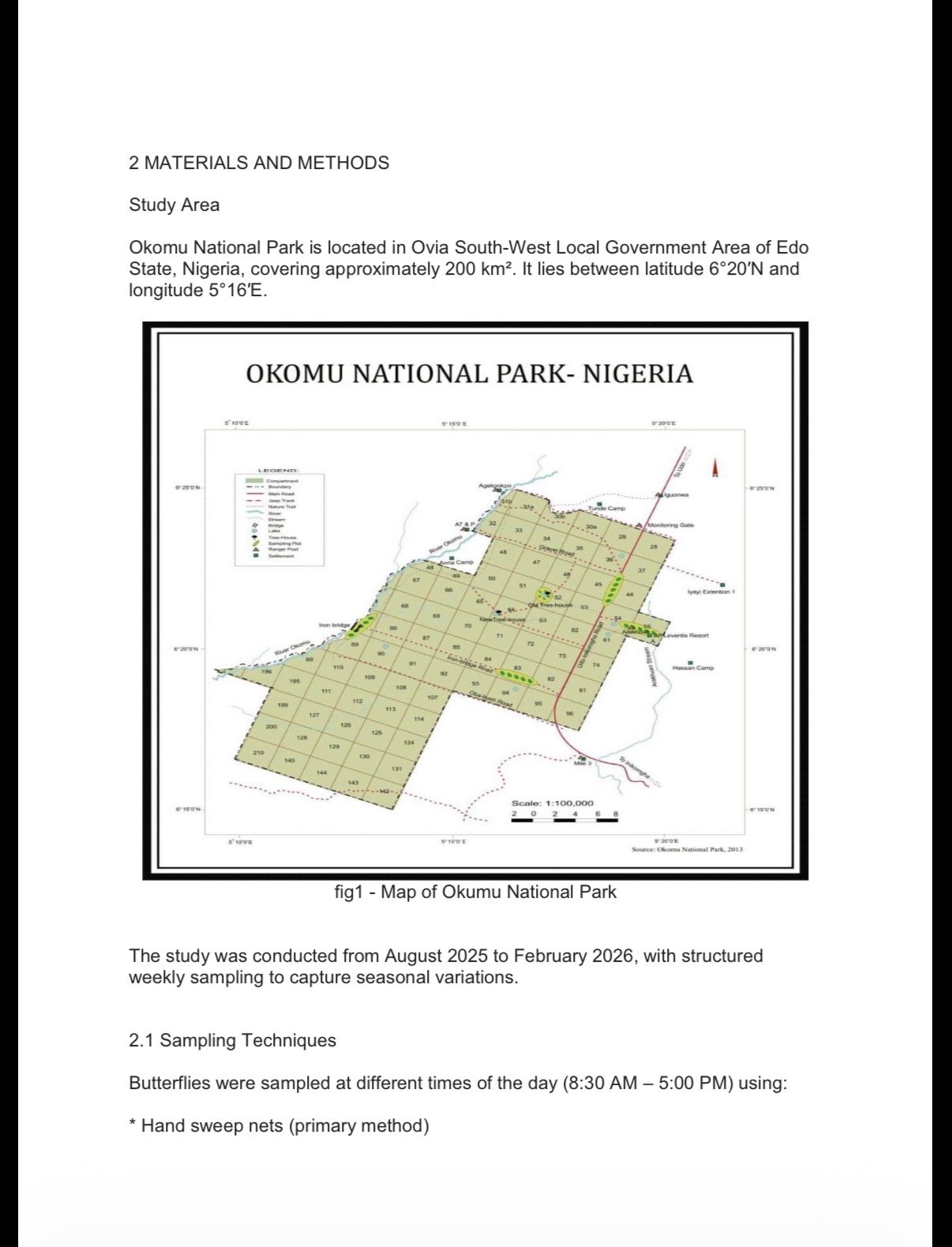
The study was conducted in Okomu National Park, located in Ovia South-West Local Government Area of Edo State,
Nigeria. Weekly field assessments were carried out between August 2025 and February 2026. Sampling methods
included: • Hand sweep nets
• Fruit bait using fermented banana, pineapple, and orange
• Organic attractants
• Line transect walks Butterfly activity was monitored between 8:30 AM and 5:00 PM, with peak activity observed
between 10:00 AM and 3:00 PM during sunny conditions.Study Locations
Sampling was conducted across diverse ecological zones, including: • Forest edges
• Closed canopy forests
• Riparian habitats
• Grasslands
• Shrublands
• Plantation areas These habitat variations contributed significantly to the observed species diversity.
Results and Discussion
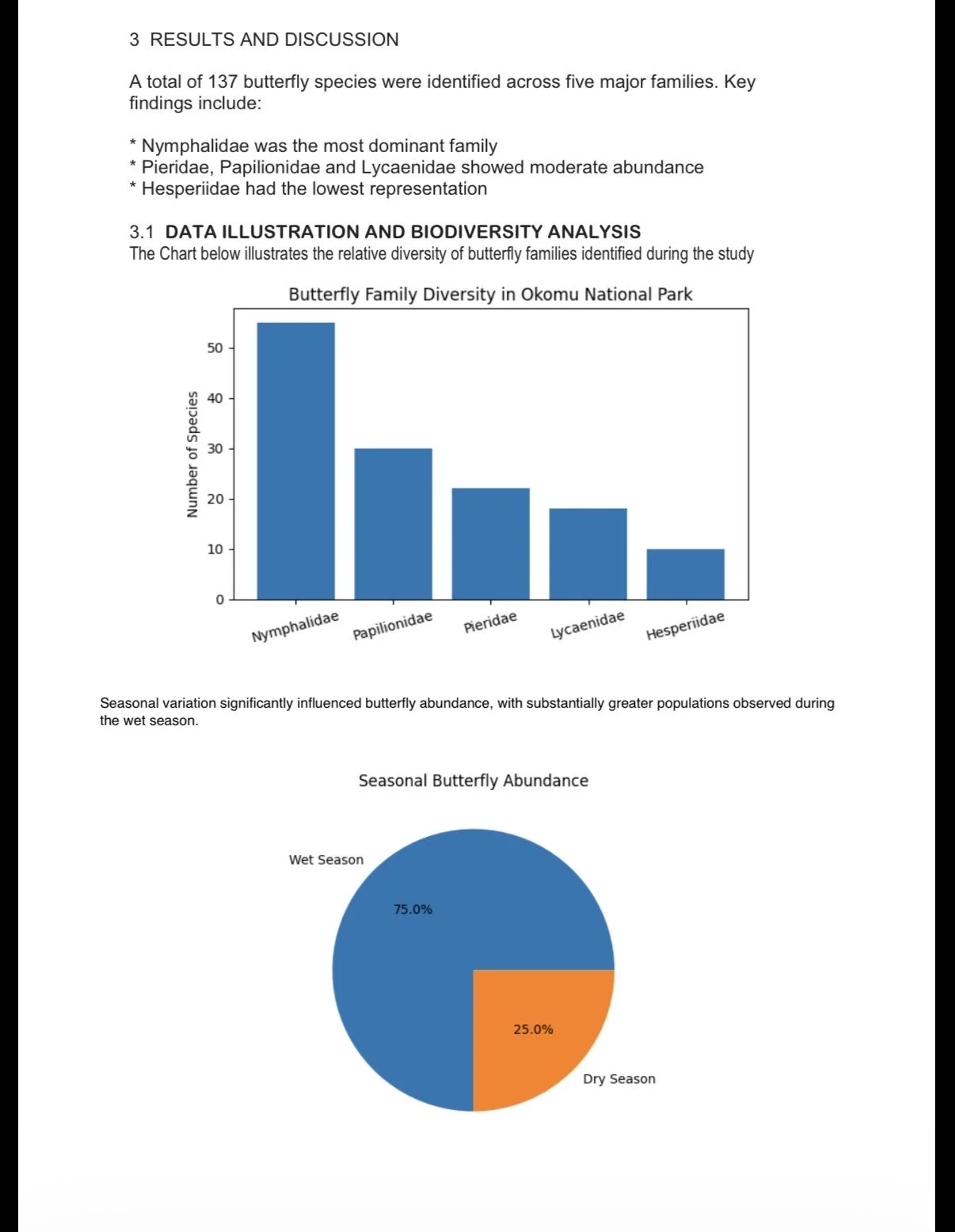
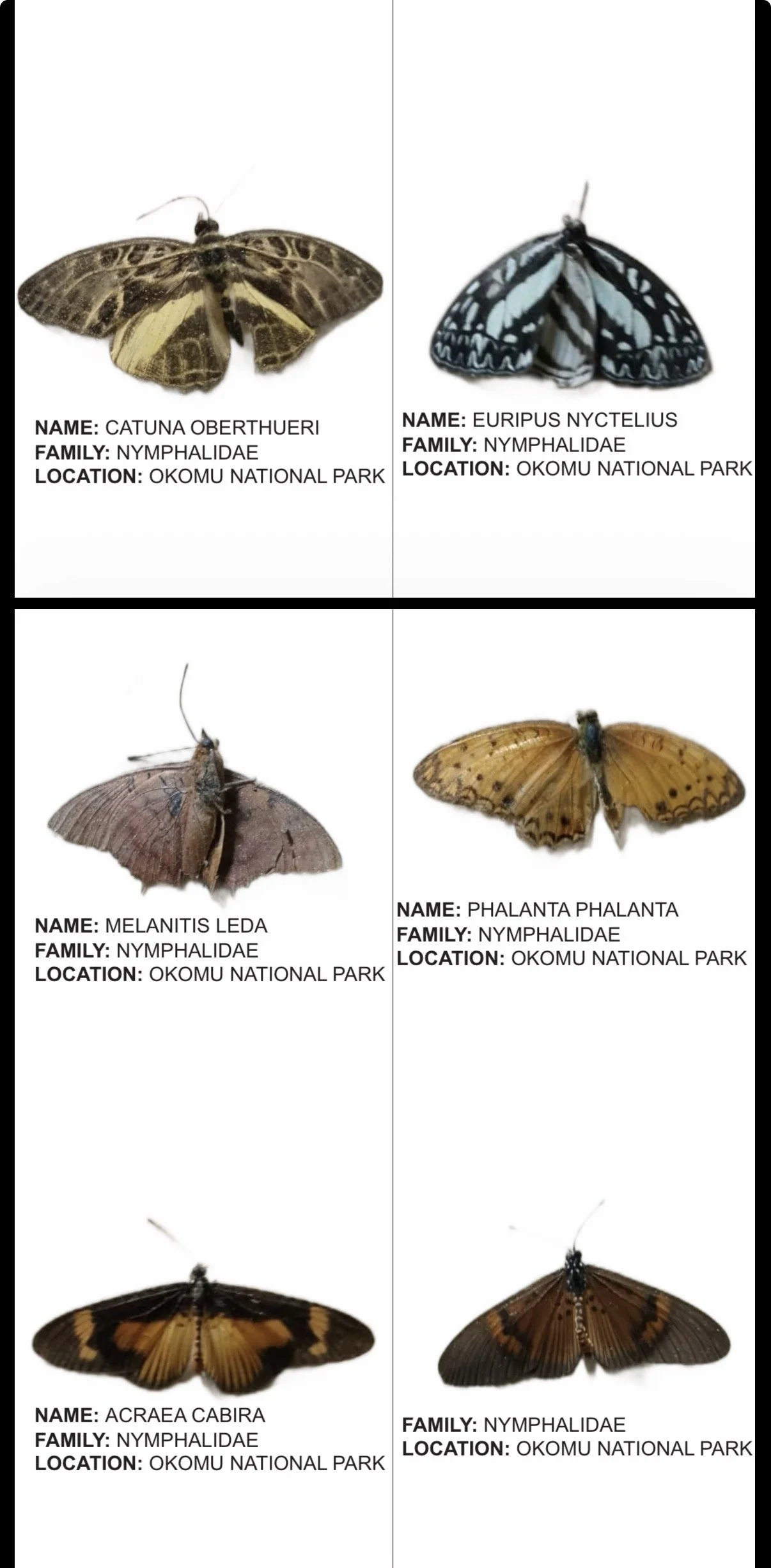
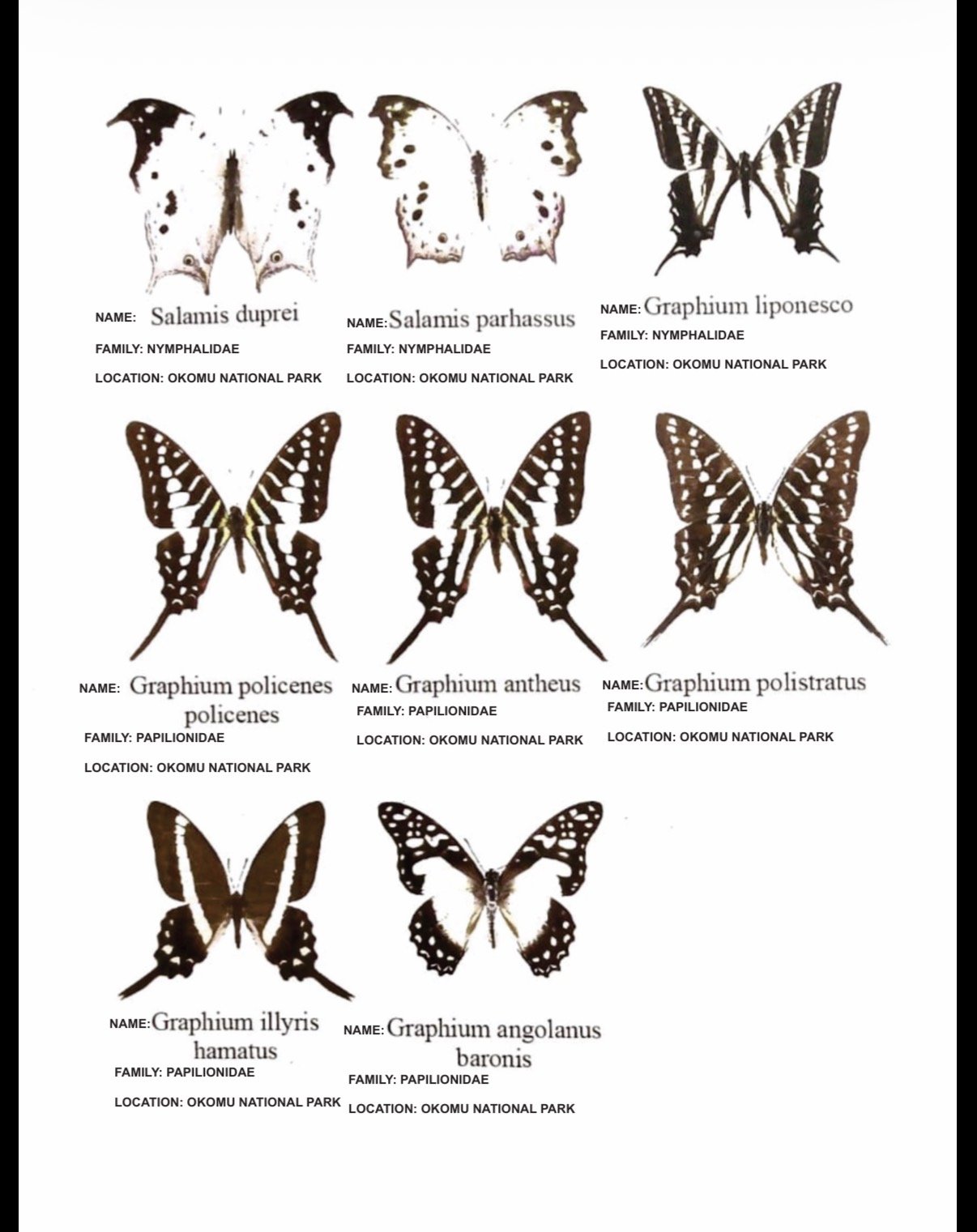
The assessment identified 135 butterfly species across five major families: • Nymphalidae
• Papilionidae
• Pieridae
• Lycaenidae
• Hesperiidae Nymphalidae was the most abundant family, while Hesperiidae showed the lowest representation.
Protected habitats with greater plant diversity supported higher butterfly populations. Rainfall and seasonal changes
strongly influenced butterfly abundance, with wet season populations significantly higher than those observed during
the dry season.
Key Findings
• Butterfly diversity was highest in undisturbed habitats.
• Areas with greater plant diversity supported more butterfly species.
• Open canopy regions improved visibility and sampling efficiency.
• Rainfall, temperature, and vegetation were major drivers of species distribution.
• Okomu National Park remains a stable and protected habitat for butterflies.
Conservation Recommendations
1. Strengthen conservation policies within protected areas.
2. Expand biodiversity monitoring and ecological research programs.
3. Encourage eco-tourism initiatives that support conservation funding.
4. Develop habitat restoration programs in degraded zones.
5. Promote environmental education and public awareness campaigns.
6. Establish long-term butterfly monitoring and species documentation programs.
Conclusion
The study confirms that Okomu National Park is an important refuge for butterfly biodiversity in Nigeria. Seasonal
rainfall, vegetation density, and habitat quality were identified as critical factors influencing butterfly abundance and
diversity. Protecting these habitats will contribute to ecosystem stability, improved pollination, biodiversity
conservation, and sustainable environmental management. Continued collaboration among conservation
organizations, government agencies, researchers, and local communities is essential for long-term success.
AcknowledgementsWe sincerely appreciate the management and staff of Okomu National Park for their support throughout this study.
We also acknowledge the contributions of the Department of Agriculture, Purdue University, USA, and all field
researchers and conservation partners who assisted in the successful completion of this project.
Selected References
Adedeji, O. H. (2011). Butterfly diversity in the Nigerian Obudu Mountain Resort.
Adeniyi, K. A., Adeyemi, O. S., Adeyemi, S. O. (2017). Assessment of butterfly diversity in Nigeria.
Larsen, T. B. (2005). Butterflies of West Africa.
Pollard, E. (1998). Temperature, rainfall and butterfly numbers.
Sutherland, W. J. (2001). The Conservation Handbook.
Thomas, C. D. (1991). Habitat use and geographic ranges of butterflies..